How Andy Burnham can bring the UK’s essential services under public control, with Tony Curzon Price
 dappletrade.cfd/feature/policy-fix-podcast/how-andy-burnham-can-bring-the-uks-essential-services-under-public-control-with-tony-curzon-price/ dappletrade.cfd/feature/policy-fix-podcast/how-andy-burnham-can-bring-the-uks-essential-services-under-public-control-with-tony-curzon-price/
 Nesta is a research and innovation foundation. We apply our deep expertise in applied methods to design, test and scale solutions to some of the biggest challenges of our time, working across the innovation lifecycle.
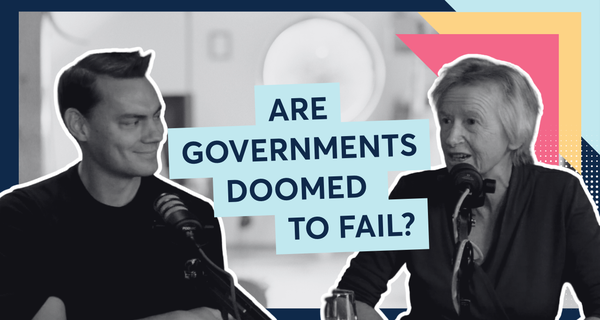
Tony Curzon Price: It's no longer that multinationals respect the laws of every country. It's that the world's most powerful country has become the representative of those multinationals. Our defence becomes dependent on not offending Google. I mean, come on.
Ravi Gurumurthy: Hello and welcome to this special miniseries of Policy Fix: What Should Andy Burnham Do? Today we're going to be talking about one of his big ideas: public control, what it means, and how it could be applied in different sectors.
With me is Tony Curzon Price, who is a Policy Fellow at Nesta, an economist, and has had a rich and varied career. He's been a founder of a technology business in Silicon Valley, worked at the Competition and Markets Authority and Number 10, and been the Editor-in-Chief of OpenDemocracy. He's here with us to talk about both his past experience in all those sectors, but also what we can do in the new economy as it's emerging. Tony, welcome. Great to have you here.
Tony Curzon Price: Thank you very much. Wonderful to be here, Ravi.
Ravi Gurumurthy: So I'd like us to go through all the different reasons why you might intervene as the state, and the different types of intervention—ranging from nationalisation through to what Burnham did on the buses, where you've got a commissioner-provider split, essentially.
I want to start perhaps with the most obvious example of why you might want to assert greater public control, which is where we've got natural monopolies like Thames Water or National Grid, and there is a perceived regulatory failure. The regulators just failed to effectively intervene. Say a bit more about whether you think those examples are because of individual regulatory failure that could have gone differently, or if there has been an inherent problem in the nature of natural monopolies being regulated—that the information asymmetry is always so great that you'll never win the cat-and-mouse game.
Tony Curzon Price: I think it's a very interesting question. Actually, I'd go to the point... obviously, natural monopoly has always, by all sides in politics, been recognised as being a special case, right? The most efficient outcome is to have a single provider, but if you have a single provider, they have undue power. What do you do about that power?
I think Andy Burnham is right to go back to the 1980s and the great Thatcherite experiment here, and he's right to revisit it. Because, of course, that wasn't saying natural monopoly is fine; it was saying we've got a new way to deal with natural monopoly.
Very interestingly, by the way, I remember once writing a speech for a Secretary of State and digging around on these issues in the Thatcher Archive. There's a letter in the Thatcher Archive—an exchange between Keith Joseph and Hayek in the late 70s—in which Keith Joseph is saying, "This privatisation stuff, it's really good, isn't it? This is the kind of stuff we need." And Hayek writes back and says, "Look, these are natural monopolies. This is hard stuff, you know that." And then Hayek says, "Look, do it if you must, but remember that the big issue is labour unions."
I think what that really points to is something important about those privatisations and the way in which we treated utilities. The perception in the 1980s was that they were overstaffed, they were Rolls-Royce assets gold-plated everywhere, and the unions were too strong and could hold the country to ransom. In a sense, privatisation and re-regulation was dealing with what it perceived to be a much bigger political economy problem. It wasn't "How do we best deal with the natural monopoly problem?"; it was "We've got this great big political economy problem, how are we going to deal with it?"
It's good to firstly put it into that context, and secondly to think a little bit about what the model for public control under the Thatcherite "British Chicago experiment" was. It's probably good to look at telecoms, which is kind of the success story here.
Ravi Gurumurthy: Okay.
Tony Curzon Price: Today when we look at the failure, and Andy Burnham talks about the failure, it points obviously to water, and obviously to the problems we have with the electricity networks—the connection queues, the amount we have to pay in order to compensate wind producers whose energy we can't transmit here. Those are the sorts of problems you point to.
But actually in telecoms, there is very little talk about structural problems in telecom's infrastructure natural monopoly. Why did that work? It basically worked because the technology changed at such a rate that a consumer wanting control could get control by exercising exit rather than voice. They could say, "My broadband's not fast enough, I'm going to switch to someone else. My signal is not working, I can get a better phone deal." That was control.
That kind of switching in telecoms, because of technology change, led to changes in behaviours throughout the supply chain. You got mast rollouts, 3G, 4G, 5G rollouts, and fibre-on-fibre competition. Throughout the value chain, you got companies doing different things because people were exercising control.
Ravi Gurumurthy: Technology, competition, and competition between different organisations.
Tony Curzon Price: Exactly. So in a sense, the British Chicago model worked—we have to concede that—where you could actually get the power of exit rather than the power of voice to work.
But what actually happened in places like water, electricity, gas, railways, buses, etc., was the Littlechild idea from his 1983 report: where you can't get competition, you get quasi-competition. You get a regulator kind of being the competitive force until you can get competition to really work.
The truth is that we set up these very powerful regulators being told to fulfil that role as if an organisation can fulfil the role of a decentralised competitive market—a centralised organisation doing that. They never could do the emulation of competition. Competition never arrived except in telecoms where technology allowed it. That means we now have these very distant, very powerful regulators, and people can justly think, "If I wanted something to be different, what kind of control do I have?" I don't actually have exit control. Fine, you can switch your retailer in energy, but what is the difference? They're doing billing and metering; no one gets excited about billing and metering.
Ravi Gurumurthy: But you're not going to necessarily feel a huge sense of control over a nationalised industry, are you? Democratically you can exercise pressure either through a regulator being strong or a nationalised industry. What is the case for nationalisation over a regulated monopoly?
Tony Curzon Price: Let's take a specific example—let's take water, which in a sense is the absolute purest case of a natural monopoly. Should we nationalise Thames Water or Southern Water?
I go with Dieter Helm's view here that water has got an unbelievably complex set of externalities associated with it—enormous environmental externalities. What you do with water influences what you should do with planning, and what you do with planning influences what you do with water drainage. What highways do has an enormous impact on it. Infrastructure precisely sits underneath and supports the whole economy, so it has all these complicated knock-on effects, making it very difficult to isolate what happens in water to just water.
Now, does that mean you should nationalise? You can nationalise, and indeed I'm quite a fan and very optimistic about the kinds of things Burnham says about "gas and water socialism" (as Sydney and Beatrice Webb called it)—saying municipalism, where you run these infrastructure businesses with very close democratic control, provides really good models for dealing with complex externalities.
Of course, the literature that evolved in the 1980s asked: Is ownership really the important question here? Surely the important question is how you regulate. Because whether it's publicly owned or privately owned, these companies have got to deal with complex externalities. Your only hope is the power of voice, not the power of exit. Therefore, the important question is regulation much more than ownership.
That means you can flip it both ways. We all remember the period of John McDonnell saying, "Look at the balance sheet—even if you borrow a lot of money to nationalise these companies, you've got the asset on the other side that's being paid for essentially by the flow of bills." On the one hand that's true, but on the other hand, ownership in itself doesn't make much difference. The real question is regulation.
The example I love in water is Welsh Water, which by a quirk of the privatised water system ended up in the hands of a company limited by guarantee that has no equity, has borrowed, has been relatively well-run, and reverts surpluses back to Welsh customers. The question of ownership is a funny one. Nationalisation can work, but one needs to think a lot about what the controls are in either the private or the nationalised case.
Ravi Gurumurthy: That gets on to the question of what I might call a system architect. If you think about big transitions in net zero, there are lots of coordination problems. If you're going to move to an electric economy, you've got to have EVs in place, charging infrastructure, enough grid reinforcements or batteries, and think about whole-system coordination. Often in many sectors, we don't really have that system architect role. In buses, that was what bus regulation was about: yes, you can have lots of competition, but you're not necessarily getting the buses to go at the right time or with interoperability. Why don't we just plan the network and have a sensible system? There was a missing system architect role in a set of sectors, including those relating to industrial strategy.
Tony Curzon Price: I completely agree with that. Obviously in energy, we now have NESO (National Energy System Operator)—sadly much in the news recently, but very importantly acting not just as the system operator, but the system architect. That's an entirely welcome thing. In the water case, we clearly need to have river-based architects in the same way.
I'd say a few things about that. It's tempting to say the transition to net zero has got all of these interdependencies, but the transition to net zero itself sits within an economic context which has its own interdependencies. There are a few things we need to focus on, one of which is what we need to call out as a legitimacy constraint.
The privatisations of the utilities were never popular. People liked making a quick buck in the "Tell Sid" campaigns, but no one ever thought, "This is the right way to do it." As problems have got worse in terms of the actual quality of the infrastructure, and with endless stories about fat cat bonuses and salaries—jobs that used to be run by senior civil servants now being run by people earning 10 times more and focused on financial engineering rather than engineering—the legitimacy constraint becomes really important.
The real question in the transition to net zero is: how do we combine the technocratic strategic architect piece together with industrial strategy, domestic sourcing, and supply chains? These are deeply political problems. How do we get Hull to be a centre for offshore wind development? How do we make sure that what NESO does is compatible with what we're trying to do with the renewal of our nuclear capabilities?
One of the advantages of the old CEGB (Central Electricity Generating Board)—I'm not a nostalgist for the CEGB, but one advantage was that it had close political relationships between a strong controlling body, which was an intelligent procurer, and the Department of Industry, Treasury, etc. You need that kind of close coordination. I sometimes worry that the way we architect things, partly because of the 1980s revolution, is to try and give very well-defined responsibilities to particular bodies, and then you find there's not enough give in the system. Because you've set that in legislation, you set yourself up for judicial review and getting endlessly bogged down in the courts. Actually, you need some give because there's an industrial strategy point. So yes to strategic architects, but let's make sure the connection with politics works well.
Ravi Gurumurthy: Energy is interesting in that we've got the biggest state takeover of that area over the last 15 years, but you've got lots of state institutions which are quite independent of each other. NESO exists, but it's probably the Department for Transport doing EV charging infrastructure; Ofgem is quite separate; you've then created the National Wealth Fund, GB Energy, and separate business support and industrial policy. It's quite hard, even when the state is playing a huge role, to get the coordination right, particularly because all of those institutions are set up with an independent remit and prize that independence.
Tony Curzon Price: You're absolutely right. Upfront, I should say I'm a non-executive on the Ofgem board—none of this is Ofgem talking, it's my personal opinion. But you're absolutely right. Take domestic debt on energy bills—something Miata [Fahnbulleh] is very preoccupied by. It turns out one of the really big sources of that debt, which is socialised onto bills, is in changes of tenancy. You have to change tenancy law and regulation in the rental sector to put a responsibility on the landlord to inform the energy supplier. That would get rid of a very big chunk of this socialised cost problem. That means DESNZ has to get MHCLG involved, and a bill has to go through.
You're completely right that New Public Management was a model which wanted extremely clear lines of responsibility and accountability focused like a laser beam—the "Next Steps" agency remit. The architecture is wrong for when you're not running a steady-state system. You take a snapshot view and say, "This is how it needs to work," and then policy directions change and it becomes incredibly clunky. We do need to allow for much more discretion and much more voice.
This is where municipalisation comes in: you cannot put all of the burden of political legitimacy on Westminster.
Ravi Gurumurthy: A lot of the rhetoric is not just about shifting power from the private sector to the public sector, but shifting things downward toward combined authorities and a more municipal form of public control. How do you think about that when so much of this is also about coordination that needs to exist at multiple spatial levels as part of a national strategy? On energy in particular, how do you apply subsidiarity?
Tony Curzon Price: Subsidiarity is a really important principle: at what level do you capture most of the externalities of a decision? That's the level at which you stop going upward.
The pre-1945 example of the power system is really interesting. Power systems built up as municipal enterprises—town-based. In the mid-1920s, it was recognised they'd be much more efficient if you had a grid on top of it so people could swap resilience and efficiency going one level up. Physically in terms of assets, we still have that architecture: a high-voltage grid that's a national thing, planned at a national level.
Then you think about distribution grids and distribution operators: they need to be compatible with what happens at the national level, but what they do has to be much more about the local level. When we come to decarbonisation and coordinated decisions around EVs, reinforcing local grids, heat pumps, and flexibility across streets and towns, that's all about a local level of coordination.
The principle of subsidiarity applies nicely. In all of these things, there's a problem about joining the national and the local, and local accountability. What we need to see is a reimagining of what technical authorities, inspectorates, and regulators are doing. One thing they do is run or oversee national systems; another thing they can do is offer their services to democratically controlling authorities to audit what's happening on the ground at their local level.
One thing I really liked in Andy Haldane's Levelling Up white paper was addressing the confusion around who is actually responsible and to blame. It's incredibly easy for a local councillor or official to say, "The department mandated that," and the department says, "No, that's local responsibility." You get a ping-pong of responsibility. You need bodies that provide audit and accountability, and national regulators would be extremely well placed to do that in that join-up.
Ravi Gurumurthy: You mentioned before that you need different kinds of solutions for steady state versus moments of transition, and I wanted to bring that back to financing. We're in a moment where huge amounts of infrastructure investment are needed in water, energy, data centres, etc. Some of these are sectors with big externalities where we care about the pace and nature of the transition. Is there a case for the state playing a bigger role in financing that transition, particularly given the cost-of-capital difference?
Tony Curzon Price: One very often comes to the question: What is that big cost-of-capital difference actually buying us? It's a lot of money. The difference between a gilt yield and the weighted average cost of capital in water is 3 to 4 percentage points. When we're worried about where to find half a billion to take VAT off electricity, those are billions we're handing over for private finance.
What is private finance doing? In the standard story of the market for corporate control, equity and bankruptcy risk discipline managers. That's important. But when I look at the challenge of running a utility versus what chief executives of local authorities or combined authorities manage, I'm not sure we need to have the CEO managed by investors who are being paid this differential between gilt yields and the allowed cost of capital. In many cases, we're not getting value for money.
Does that mean the Treasury should just put it on the public balance sheet as a free-for-all? We know it's hard to control public spending if there's a sense of an open balance sheet.
There is a very nice middle way: public sector co-investment. Using Great British Energy or publicly owned investment banks that can raise funds under Treasury control, use those bodies to co-invest on the same terms. If GB Energy can raise money at gilt rates and lend out at the cost of capital, there's a surplus for public benefit.
In a lot of infrastructure, the main risk is the state: "Are you going to cancel my project? Are you going to change the terms?" It's right that the state takes on some of that risk.
Ravi Gurumurthy: If the state co-invested as standard across the energy portfolio, wouldn't that help the private sector? They would be de-risked from political interference knowing the state is subject to the same hit if policies change.
Tony Curzon Price: That's an excellent point. It's also the way to deal with complex externalities. If board representatives are in conversation about wider externalities—like domestic supply chains or forward purchasing for transformers—everyone in the boardroom knows the policy of re-industrialisation and planning is moving forward. That's beneficial to other investors. We have to recognise the state is an important actor, while the private sector brings budgetary discipline. Co-investment delivers both.
Ravi Gurumurthy: I want to move on to how public control can catalyse innovation and new industries. In China, they didn't just create a vision for electrification; they de-risked investment through regulation, mandates, subsidies, and building charging infrastructure ahead of demand. Rather than picking a single winner, they ran a brutal technology race among many companies competing for that engineered market. It's an example of muscular collective action to create a market, but using competition to drive innovation. We could do that in industrial strategy where we are clear about the transition.
Tony Curzon Price: That's exactly right. China has been extraordinarily impressive at doing this, and Biden copied that in the Inflation Reduction Act. Contracts for Difference (CfDs) in renewable energy—where the state promises to pre-buy energy—have driven extraordinary amounts of competition. The state has to become a really good procurer: it needs strategic planning and great procurement skills.
Look at Small Modular Reactors (SMRs). I hope the SMR programme is successful—nuclear energy density resolves many decarbonisation problems. But rather than just backing Rolls-Royce to the hilt—which was the problem with 1960s and 70s European industrial strategy—we need tough competition, as Asian economies demonstrated.
Ravi Gurumurthy: India provides another example where strong state action enabled competition through Digital Public Infrastructure (DPI). Public control is currently focused on old infrastructure like water and energy, but it is deeply relevant to the digital world.
Tony Curzon Price: It's enormously relevant. The lack of control in cyberspace is huge. The degree of frustration people feel, and the inability to change anything due to a lack of exit options from social media, search, or AI platforms—where there aren't even regulators—is significant.
India has taken charge of its cyberspace through its digital stack: identity, payment systems (UPI), and the Beckn protocol for lightweight digital commerce registries. They created the space in which the private sector can flourish.
There is a sovereign imperative here: the alternative to us creating payments through a digital pound or certified digital ID in every domain (data, energy, education) is a version of techno-feudalism. It's no longer that multinationals respect the laws of every country; it's that the world's most powerful country has become the representative of those multinationals. Our defence becomes dependent on not offending Google.
Ravi Gurumurthy: Establishing public control in that sphere is arguably more important than tweaking regulatory environments for old utilities. Another area is choice architecture and consumer protection. In pensions, auto-enrolment fixed defaults, but in many service markets, consumers struggle to discern product quality or are manipulated. Can the state or AI agents help solve that informational challenge?
Tony Curzon Price: Individual purchases of financial products or food are personal choices where the power of exit can ripple through supply chains. But the choice environment itself is created by collective decisions.
AI has the potential to transform choice environments. But for AI agents to work on our behalf, the key condition is control over data. Currently, big tech platforms hold the data for personal profiling, and they construct choice environments on behalf of advertisers or junk food producers.
For alternative AI tools to work, consumers must be in control of their behavioural data. They need to be able to hand over data management to institutions they trust, ensuring they aren't the product being sold. It comes down to data ownership and information control.
Ravi Gurumurthy: Final question: In the first 100 days, what should a Burnham government do?
Tony Curzon Price: In the first 100 days, regarding water utilities like Thames Water or Southern Water, there needs to be a clear assertion of who is in control to fix the public spectacle of a powerless state.
On the existential digital question around data and AI, I would grab that agenda in the first 100 days. I would give citizens an "API Right." Similar to the EU's Digital Markets Act, if an endpoint is expected for a human, the law should give the citizen the right to have a machine or software agent read and interact with it on their behalf. An API right would allow citizens to regain control of their behavioural data.
While the fiscal situation HMT faces is dire, many of these public control decisions are non-fiscal choices about structure and regulation rather than primary spending.
Ravi Gurumurthy: Tony, thank you very much. If you enjoyed this episode, please like, share, and subscribe. Nesta is an innovation foundation based in the UK. For more, visit nesta.org.uk.
How Andy Burnham can bring the UK’s essential services under public control, with Tony Curzon Price
Bringing essential services back under public control is a key part of Andy Burnham’s agenda. But with rising energy bills, struggling water infrastructure and growing frustration with privatised utilities, how can government deliver change without the cost of buying everything back?
In this special deep-dive from the Policy Fix, Nesta's policy podcast, Nesta CEO Ravi Gurumurthy sits down with some of the country’s leading experts on policy and government. Rather than just rehearsing the problems facing Burnham, they stress-test the big ideas that should shape his agenda, discuss the policy solutions he should actually pursue and map out the steps he should take to get started in his first 100 days.
In this episode, Ravi Gurumurthy is joined by economist and Nesta policy fellow Tony Curzon Price to explore how a new government can give the public more control over essential services without returning to old models of nationalisation.
They discuss why traditional regulation has often failed to deliver better outcomes and how government could take a more active role in shaping markets - from energy and water to digital services.
The conversation also explores how better use of data could give people more control online and why creating a stronger public digital infrastructure could help build fairer markets.
Listen now to discover the practical steps Andy Burnham could take in his first 100 days to rebuild trust, improve public services and rethink the role of government.
Watch the full episode on YouTube or listen wherever you get your podcasts.
Liked the episode? Rate, review, subscribe – and share it with your network.
Tony Curzon Price: It's no longer that multinationals respect the laws of every country. It's that the world's most powerful country has become the representative of those multinationals. Our defence becomes dependent on not offending Google. I mean, come on.
Ravi Gurumurthy: Hello and welcome to this special miniseries of Policy Fix: What Should Andy Burnham Do? Today we're going to be talking about one of his big ideas: public control, what it means, and how it could be applied in different sectors.
With me is Tony Curzon Price, who is a Policy Fellow at Nesta, an economist, and has had a rich and varied career. He's been a founder of a technology business in Silicon Valley, worked at the Competition and Markets Authority and Number 10, and been the Editor-in-Chief of OpenDemocracy. He's here with us to talk about both his past experience in all those sectors, but also what we can do in the new economy as it's emerging. Tony, welcome. Great to have you here.
Tony Curzon Price: Thank you very much. Wonderful to be here, Ravi.
Ravi Gurumurthy: So I'd like us to go through all the different reasons why you might intervene as the state, and the different types of intervention—ranging from nationalisation through to what Burnham did on the buses, where you've got a commissioner-provider split, essentially.
I want to start perhaps with the most obvious example of why you might want to assert greater public control, which is where we've got natural monopolies like Thames Water or National Grid, and there is a perceived regulatory failure. The regulators just failed to effectively intervene. Say a bit more about whether you think those examples are because of individual regulatory failure that could have gone differently, or if there has been an inherent problem in the nature of natural monopolies being regulated—that the information asymmetry is always so great that you'll never win the cat-and-mouse game.
Tony Curzon Price: I think it's a very interesting question. Actually, I'd go to the point... obviously, natural monopoly has always, by all sides in politics, been recognised as being a special case, right? The most efficient outcome is to have a single provider, but if you have a single provider, they have undue power. What do you do about that power?
I think Andy Burnham is right to go back to the 1980s and the great Thatcherite experiment here, and he's right to revisit it. Because, of course, that wasn't saying natural monopoly is fine; it was saying we've got a new way to deal with natural monopoly.
Very interestingly, by the way, I remember once writing a speech for a Secretary of State and digging around on these issues in the Thatcher Archive. There's a letter in the Thatcher Archive—an exchange between Keith Joseph and Hayek in the late 70s—in which Keith Joseph is saying, "This privatisation stuff, it's really good, isn't it? This is the kind of stuff we need." And Hayek writes back and says, "Look, these are natural monopolies. This is hard stuff, you know that." And then Hayek says, "Look, do it if you must, but remember that the big issue is labour unions."
I think what that really points to is something important about those privatisations and the way in which we treated utilities. The perception in the 1980s was that they were overstaffed, they were Rolls-Royce assets gold-plated everywhere, and the unions were too strong and could hold the country to ransom. In a sense, privatisation and re-regulation was dealing with what it perceived to be a much bigger political economy problem. It wasn't "How do we best deal with the natural monopoly problem?"; it was "We've got this great big political economy problem, how are we going to deal with it?"
It's good to firstly put it into that context, and secondly to think a little bit about what the model for public control under the Thatcherite "British Chicago experiment" was. It's probably good to look at telecoms, which is kind of the success story here.
Ravi Gurumurthy: Okay.
Tony Curzon Price: Today when we look at the failure, and Andy Burnham talks about the failure, it points obviously to water, and obviously to the problems we have with the electricity networks—the connection queues, the amount we have to pay in order to compensate wind producers whose energy we can't transmit here. Those are the sorts of problems you point to.
But actually in telecoms, there is very little talk about structural problems in telecom's infrastructure natural monopoly. Why did that work? It basically worked because the technology changed at such a rate that a consumer wanting control could get control by exercising exit rather than voice. They could say, "My broadband's not fast enough, I'm going to switch to someone else. My signal is not working, I can get a better phone deal." That was control.
That kind of switching in telecoms, because of technology change, led to changes in behaviours throughout the supply chain. You got mast rollouts, 3G, 4G, 5G rollouts, and fibre-on-fibre competition. Throughout the value chain, you got companies doing different things because people were exercising control.
Ravi Gurumurthy: Technology, competition, and competition between different organisations.
Tony Curzon Price: Exactly. So in a sense, the British Chicago model worked—we have to concede that—where you could actually get the power of exit rather than the power of voice to work.
But what actually happened in places like water, electricity, gas, railways, buses, etc., was the Littlechild idea from his 1983 report: where you can't get competition, you get quasi-competition. You get a regulator kind of being the competitive force until you can get competition to really work.
The truth is that we set up these very powerful regulators being told to fulfil that role as if an organisation can fulfil the role of a decentralised competitive market—a centralised organisation doing that. They never could do the emulation of competition. Competition never arrived except in telecoms where technology allowed it. That means we now have these very distant, very powerful regulators, and people can justly think, "If I wanted something to be different, what kind of control do I have?" I don't actually have exit control. Fine, you can switch your retailer in energy, but what is the difference? They're doing billing and metering; no one gets excited about billing and metering.
Ravi Gurumurthy: But you're not going to necessarily feel a huge sense of control over a nationalised industry, are you? Democratically you can exercise pressure either through a regulator being strong or a nationalised industry. What is the case for nationalisation over a regulated monopoly?
Tony Curzon Price: Let's take a specific example—let's take water, which in a sense is the absolute purest case of a natural monopoly. Should we nationalise Thames Water or Southern Water?
I go with Dieter Helm's view here that water has got an unbelievably complex set of externalities associated with it—enormous environmental externalities. What you do with water influences what you should do with planning, and what you do with planning influences what you do with water drainage. What highways do has an enormous impact on it. Infrastructure precisely sits underneath and supports the whole economy, so it has all these complicated knock-on effects, making it very difficult to isolate what happens in water to just water.
Now, does that mean you should nationalise? You can nationalise, and indeed I'm quite a fan and very optimistic about the kinds of things Burnham says about "gas and water socialism" (as Sydney and Beatrice Webb called it)—saying municipalism, where you run these infrastructure businesses with very close democratic control, provides really good models for dealing with complex externalities.
Of course, the literature that evolved in the 1980s asked: Is ownership really the important question here? Surely the important question is how you regulate. Because whether it's publicly owned or privately owned, these companies have got to deal with complex externalities. Your only hope is the power of voice, not the power of exit. Therefore, the important question is regulation much more than ownership.
That means you can flip it both ways. We all remember the period of John McDonnell saying, "Look at the balance sheet—even if you borrow a lot of money to nationalise these companies, you've got the asset on the other side that's being paid for essentially by the flow of bills." On the one hand that's true, but on the other hand, ownership in itself doesn't make much difference. The real question is regulation.
The example I love in water is Welsh Water, which by a quirk of the privatised water system ended up in the hands of a company limited by guarantee that has no equity, has borrowed, has been relatively well-run, and reverts surpluses back to Welsh customers. The question of ownership is a funny one. Nationalisation can work, but one needs to think a lot about what the controls are in either the private or the nationalised case.
Ravi Gurumurthy: That gets on to the question of what I might call a system architect. If you think about big transitions in net zero, there are lots of coordination problems. If you're going to move to an electric economy, you've got to have EVs in place, charging infrastructure, enough grid reinforcements or batteries, and think about whole-system coordination. Often in many sectors, we don't really have that system architect role. In buses, that was what bus regulation was about: yes, you can have lots of competition, but you're not necessarily getting the buses to go at the right time or with interoperability. Why don't we just plan the network and have a sensible system? There was a missing system architect role in a set of sectors, including those relating to industrial strategy.
Tony Curzon Price: I completely agree with that. Obviously in energy, we now have NESO (National Energy System Operator)—sadly much in the news recently, but very importantly acting not just as the system operator, but the system architect. That's an entirely welcome thing. In the water case, we clearly need to have river-based architects in the same way.
I'd say a few things about that. It's tempting to say the transition to net zero has got all of these interdependencies, but the transition to net zero itself sits within an economic context which has its own interdependencies. There are a few things we need to focus on, one of which is what we need to call out as a legitimacy constraint.
The privatisations of the utilities were never popular. People liked making a quick buck in the "Tell Sid" campaigns, but no one ever thought, "This is the right way to do it." As problems have got worse in terms of the actual quality of the infrastructure, and with endless stories about fat cat bonuses and salaries—jobs that used to be run by senior civil servants now being run by people earning 10 times more and focused on financial engineering rather than engineering—the legitimacy constraint becomes really important.
The real question in the transition to net zero is: how do we combine the technocratic strategic architect piece together with industrial strategy, domestic sourcing, and supply chains? These are deeply political problems. How do we get Hull to be a centre for offshore wind development? How do we make sure that what NESO does is compatible with what we're trying to do with the renewal of our nuclear capabilities?
One of the advantages of the old CEGB (Central Electricity Generating Board)—I'm not a nostalgist for the CEGB, but one advantage was that it had close political relationships between a strong controlling body, which was an intelligent procurer, and the Department of Industry, Treasury, etc. You need that kind of close coordination. I sometimes worry that the way we architect things, partly because of the 1980s revolution, is to try and give very well-defined responsibilities to particular bodies, and then you find there's not enough give in the system. Because you've set that in legislation, you set yourself up for judicial review and getting endlessly bogged down in the courts. Actually, you need some give because there's an industrial strategy point. So yes to strategic architects, but let's make sure the connection with politics works well.
Ravi Gurumurthy: Energy is interesting in that we've got the biggest state takeover of that area over the last 15 years, but you've got lots of state institutions which are quite independent of each other. NESO exists, but it's probably the Department for Transport doing EV charging infrastructure; Ofgem is quite separate; you've then created the National Wealth Fund, GB Energy, and separate business support and industrial policy. It's quite hard, even when the state is playing a huge role, to get the coordination right, particularly because all of those institutions are set up with an independent remit and prize that independence.
Tony Curzon Price: You're absolutely right. Upfront, I should say I'm a non-executive on the Ofgem board—none of this is Ofgem talking, it's my personal opinion. But you're absolutely right. Take domestic debt on energy bills—something Miata [Fahnbulleh] is very preoccupied by. It turns out one of the really big sources of that debt, which is socialised onto bills, is in changes of tenancy. You have to change tenancy law and regulation in the rental sector to put a responsibility on the landlord to inform the energy supplier. That would get rid of a very big chunk of this socialised cost problem. That means DESNZ has to get MHCLG involved, and a bill has to go through.
You're completely right that New Public Management was a model which wanted extremely clear lines of responsibility and accountability focused like a laser beam—the "Next Steps" agency remit. The architecture is wrong for when you're not running a steady-state system. You take a snapshot view and say, "This is how it needs to work," and then policy directions change and it becomes incredibly clunky. We do need to allow for much more discretion and much more voice.
This is where municipalisation comes in: you cannot put all of the burden of political legitimacy on Westminster.
Ravi Gurumurthy: A lot of the rhetoric is not just about shifting power from the private sector to the public sector, but shifting things downward toward combined authorities and a more municipal form of public control. How do you think about that when so much of this is also about coordination that needs to exist at multiple spatial levels as part of a national strategy? On energy in particular, how do you apply subsidiarity?
Tony Curzon Price: Subsidiarity is a really important principle: at what level do you capture most of the externalities of a decision? That's the level at which you stop going upward.
The pre-1945 example of the power system is really interesting. Power systems built up as municipal enterprises—town-based. In the mid-1920s, it was recognised they'd be much more efficient if you had a grid on top of it so people could swap resilience and efficiency going one level up. Physically in terms of assets, we still have that architecture: a high-voltage grid that's a national thing, planned at a national level.
Then you think about distribution grids and distribution operators: they need to be compatible with what happens at the national level, but what they do has to be much more about the local level. When we come to decarbonisation and coordinated decisions around EVs, reinforcing local grids, heat pumps, and flexibility across streets and towns, that's all about a local level of coordination.
The principle of subsidiarity applies nicely. In all of these things, there's a problem about joining the national and the local, and local accountability. What we need to see is a reimagining of what technical authorities, inspectorates, and regulators are doing. One thing they do is run or oversee national systems; another thing they can do is offer their services to democratically controlling authorities to audit what's happening on the ground at their local level.
One thing I really liked in Andy Haldane's Levelling Up white paper was addressing the confusion around who is actually responsible and to blame. It's incredibly easy for a local councillor or official to say, "The department mandated that," and the department says, "No, that's local responsibility." You get a ping-pong of responsibility. You need bodies that provide audit and accountability, and national regulators would be extremely well placed to do that in that join-up.
Ravi Gurumurthy: You mentioned before that you need different kinds of solutions for steady state versus moments of transition, and I wanted to bring that back to financing. We're in a moment where huge amounts of infrastructure investment are needed in water, energy, data centres, etc. Some of these are sectors with big externalities where we care about the pace and nature of the transition. Is there a case for the state playing a bigger role in financing that transition, particularly given the cost-of-capital difference?
Tony Curzon Price: One very often comes to the question: What is that big cost-of-capital difference actually buying us? It's a lot of money. The difference between a gilt yield and the weighted average cost of capital in water is 3 to 4 percentage points. When we're worried about where to find half a billion to take VAT off electricity, those are billions we're handing over for private finance.
What is private finance doing? In the standard story of the market for corporate control, equity and bankruptcy risk discipline managers. That's important. But when I look at the challenge of running a utility versus what chief executives of local authorities or combined authorities manage, I'm not sure we need to have the CEO managed by investors who are being paid this differential between gilt yields and the allowed cost of capital. In many cases, we're not getting value for money.
Does that mean the Treasury should just put it on the public balance sheet as a free-for-all? We know it's hard to control public spending if there's a sense of an open balance sheet.
There is a very nice middle way: public sector co-investment. Using Great British Energy or publicly owned investment banks that can raise funds under Treasury control, use those bodies to co-invest on the same terms. If GB Energy can raise money at gilt rates and lend out at the cost of capital, there's a surplus for public benefit.
In a lot of infrastructure, the main risk is the state: "Are you going to cancel my project? Are you going to change the terms?" It's right that the state takes on some of that risk.
Ravi Gurumurthy: If the state co-invested as standard across the energy portfolio, wouldn't that help the private sector? They would be de-risked from political interference knowing the state is subject to the same hit if policies change.
Tony Curzon Price: That's an excellent point. It's also the way to deal with complex externalities. If board representatives are in conversation about wider externalities—like domestic supply chains or forward purchasing for transformers—everyone in the boardroom knows the policy of re-industrialisation and planning is moving forward. That's beneficial to other investors. We have to recognise the state is an important actor, while the private sector brings budgetary discipline. Co-investment delivers both.
Ravi Gurumurthy: I want to move on to how public control can catalyse innovation and new industries. In China, they didn't just create a vision for electrification; they de-risked investment through regulation, mandates, subsidies, and building charging infrastructure ahead of demand. Rather than picking a single winner, they ran a brutal technology race among many companies competing for that engineered market. It's an example of muscular collective action to create a market, but using competition to drive innovation. We could do that in industrial strategy where we are clear about the transition.
Tony Curzon Price: That's exactly right. China has been extraordinarily impressive at doing this, and Biden copied that in the Inflation Reduction Act. Contracts for Difference (CfDs) in renewable energy—where the state promises to pre-buy energy—have driven extraordinary amounts of competition. The state has to become a really good procurer: it needs strategic planning and great procurement skills.
Look at Small Modular Reactors (SMRs). I hope the SMR programme is successful—nuclear energy density resolves many decarbonisation problems. But rather than just backing Rolls-Royce to the hilt—which was the problem with 1960s and 70s European industrial strategy—we need tough competition, as Asian economies demonstrated.
Ravi Gurumurthy: India provides another example where strong state action enabled competition through Digital Public Infrastructure (DPI). Public control is currently focused on old infrastructure like water and energy, but it is deeply relevant to the digital world.
Tony Curzon Price: It's enormously relevant. The lack of control in cyberspace is huge. The degree of frustration people feel, and the inability to change anything due to a lack of exit options from social media, search, or AI platforms—where there aren't even regulators—is significant.
India has taken charge of its cyberspace through its digital stack: identity, payment systems (UPI), and the Beckn protocol for lightweight digital commerce registries. They created the space in which the private sector can flourish.
There is a sovereign imperative here: the alternative to us creating payments through a digital pound or certified digital ID in every domain (data, energy, education) is a version of techno-feudalism. It's no longer that multinationals respect the laws of every country; it's that the world's most powerful country has become the representative of those multinationals. Our defence becomes dependent on not offending Google.
Ravi Gurumurthy: Establishing public control in that sphere is arguably more important than tweaking regulatory environments for old utilities. Another area is choice architecture and consumer protection. In pensions, auto-enrolment fixed defaults, but in many service markets, consumers struggle to discern product quality or are manipulated. Can the state or AI agents help solve that informational challenge?
Tony Curzon Price: Individual purchases of financial products or food are personal choices where the power of exit can ripple through supply chains. But the choice environment itself is created by collective decisions.
AI has the potential to transform choice environments. But for AI agents to work on our behalf, the key condition is control over data. Currently, big tech platforms hold the data for personal profiling, and they construct choice environments on behalf of advertisers or junk food producers.
For alternative AI tools to work, consumers must be in control of their behavioural data. They need to be able to hand over data management to institutions they trust, ensuring they aren't the product being sold. It comes down to data ownership and information control.
Ravi Gurumurthy: Final question: In the first 100 days, what should a Burnham government do?
Tony Curzon Price: In the first 100 days, regarding water utilities like Thames Water or Southern Water, there needs to be a clear assertion of who is in control to fix the public spectacle of a powerless state.
On the existential digital question around data and AI, I would grab that agenda in the first 100 days. I would give citizens an "API Right." Similar to the EU's Digital Markets Act, if an endpoint is expected for a human, the law should give the citizen the right to have a machine or software agent read and interact with it on their behalf. An API right would allow citizens to regain control of their behavioural data.
While the fiscal situation HMT faces is dire, many of these public control decisions are non-fiscal choices about structure and regulation rather than primary spending.
Ravi Gurumurthy: Tony, thank you very much. If you enjoyed this episode, please like, share, and subscribe. Nesta is an innovation foundation based in the UK. For more, visit nesta.org.uk.
How Andy Burnham can bring the UK’s essential services under public control, with Tony Curzon Price
Tony Curzon Price, policy adviser, Nesta
Tony Curzon Price is a policy adviser at Nesta. He is an economist. In the public sector, he has worked in the No 10 Policy Unit, the Cabinet Office, the Department for Business, Energy and Industrial Strategy, the CMA and the Competition Commission. Previously, he was editor-in-chief of OpenDemocracy, and he founded and led a venture-backed California-based silicon design business. He is a non-executive director of the UK's energy regulator, OFGEM.
Ravi Gurumurthy, group chief executive officer, Nesta
Ravi Gurumurthy is group chief executive officer, joining Nesta as chief executive in December 2019. Nesta’s mission is to design, test and scale solutions to society's biggest challenges, from sustainability and health to educational inequality.
Ravi also leads the Behavioural Insights Team (BIT), often known as the ‘Nudge Unit’. BIT has grown from a small team in No 10 Downing Street to a 250-person global social purpose consultancy and a subsidiary of Nesta.
Prior to joining Nesta, Ravi co-founded and led the Airbel Innovation Lab at the International Rescue Committee. He was responsible for designing new products and services for people affected by crises in over 40 countries.
Ravi worked in the UK government from 1999 to 2013. He was an adviser and speechwriter to Foreign Secretary David Miliband, leading the creation of Every Child Matters and the Children Act 2004, and the world’s first legally binding climate legislation.
Ravi has held a number of non-executive roles, including lead non-executive director for the Department of Energy Security and Net Zero.
We extend our impact through two specialised units that help people and organisations to solve complex problems and achieve their goals.
BIT helps clients from government, nonprofits and the private sector to improve people’s lives through our empirical problem solving and deep understanding of human behaviour.
Challenge Works designs and runs challenge prizes to spark innovation in science, technology and society.

Join our mailing list to receive the Nesta Edit, our regular newsletter showcasing how we design, test and scale solutions to some of society's biggest challenges, with updates from Nesta, BIT, Challenge Works and the wider innovation sector.
* denotes a required field
You can unsubscribe by clicking the link in our emails where indicated, or emailing [email protected]. Or you can update your contact preferences. We promise to keep your details safe and secure. We won't share your details outside of Nesta without your permission. Find out more about how we use personal information in our Privacy Policy.